REVIEW | PRAGMATA | CONTROLLED, ATMOSPHERIC, AND MOSTLY WORTH IT
Pragmata opens without urgency, without noise, and without the usual need to impress in the first few minutes. There’s no rush to throw mechanics at you or to prove its scale immediately. Instead, it establishes a tone and lets that tone carry the experience forward. That approach defines everything that follows. It can feel distant at first, even slightly cold, but it’s deliberate. The game is asking for patience from the beginning, and whether that works for you depends entirely on how willing you are to meet it halfway. On PC, that slower approach benefits from stability and clarity, allowing the design to come through without technical distractions, which ends up being more important here than in most modern releases.
a gameplay structure built on control, not urgency
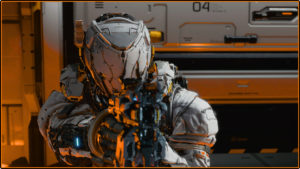
Pragmata doesn’t follow the usual rhythm of contemporary action games. There’s no constant push forward driven by spectacle or fast progression systems. Instead, the game slows things down and builds its structure around awareness and control. Movement feels measured, interactions feel intentional, and timing becomes more important than speed. You’re not reacting instinctively to what’s happening on screen. You’re observing, understanding, and then acting. That shift in approach changes how the entire experience feels. It demands attention, not reflex. This design creates a sense of precision that becomes more satisfying the longer you play. Once the mechanics settle in, there’s a rhythm to everything. You begin to anticipate situations rather than simply react to them, and that anticipation becomes the core of the experience. However, that same structure can also work against the game at times. Because it relies heavily on consistency, it doesn’t always introduce new ideas quickly enough. There are moments where the gameplay feels like it’s repeating itself without adding enough variation to justify the length of certain sections. The systems are solid, but they don’t always evolve at the pace they should.
encounters that demand awareness over aggression
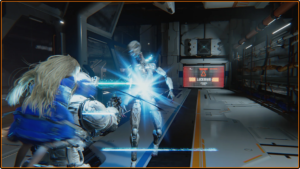
Encounters in Pragmata are not built around chaos or overwhelming force. They’re controlled, almost calculated scenarios where positioning and timing matter more than raw input speed. The game rarely asks you to dominate a situation through aggression. Instead, it asks you to manage it carefully. This creates a different kind of tension. It’s quieter, more focused, and often more demanding than traditional combat systems. When everything aligns, the experience feels precise and rewarding. You understand the logic behind each encounter, you recognize patterns, and you respond with intention. There’s a sense of control that becomes increasingly satisfying as you progress. But this design has its limits. Because encounters follow a consistent structure, they can start to feel predictable. The game doesn’t always introduce enough variation to keep every moment fresh, and that becomes noticeable in longer sessions. Still, the foundation remains strong. The mechanics don’t break, they don’t contradict themselves, and they don’t rely on randomness. That consistency is one of the game’s biggest strengths, even if it occasionally leads to repetition.
atmosphere that carries the experience
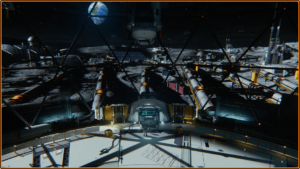
The atmosphere in Pragmata is one of its defining features. It doesn’t rely on constant visual spectacle or overwhelming detail. Instead, it builds a consistent mood through restraint. Environments feel controlled, sometimes even sterile, but never empty without purpose. There’s a sense of isolation that runs through the entire game, shaping how you interact with the world. On PC, this atmosphere is supported by stable performance and clean presentation. The game looks sharp without trying too hard. Lighting is balanced, textures are clear, and there’s a consistency in how everything is presented. It’s not a game that aims to impress through raw graphical power. It focuses on clarity and tone instead. The way space is used is particularly effective. Environments are not just backgrounds. They guide movement, influence decisions, and reinforce the overall mood. There’s a quiet tension in the design, and it holds the experience together even when the gameplay slows down.
storytelling that leaves room for interpretation
The narrative follows the same restrained approach as the gameplay. It doesn’t rely on long cutscenes or heavy exposition. Instead, it presents fragments of information and expects you to piece them together. This creates a sense of curiosity that drives the experience forward. You’re not just moving through the game. You’re trying to understand it. There’s a consistent sense of mystery that remains even as the story progresses. It doesn’t rush to explain everything, and it doesn’t feel the need to resolve every thread. That approach works, but only up to a point. There are moments where the story feels too reserved, where it holds back more than it should. Some elements could have been explored more deeply, and some answers feel just out of reach. Despite that, the tone remains strong. The narrative, the environment, and the pacing all support each other. Even when the story doesn’t fully deliver, it never feels disconnected from the rest of the experience.
pc performance that supports the design
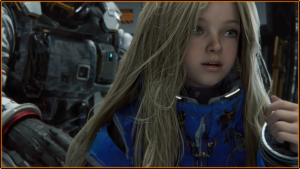
Technically, the PC version delivers exactly what it needs to. Performance is stable, frame rates remain consistent, and there are enough graphical options to adapt the experience to different hardware configurations. It doesn’t feel like a rushed port. Instead, it feels like a version that was designed to run properly. Controls are responsive and reliable. There’s no noticeable delay, and inputs feel precise. That’s essential in a game where timing and control are central to the experience. Whether you’re using a controller or mouse and keyboard, the responsiveness remains consistent. Loading times are short, transitions are smooth, and there are no major technical issues that disrupt immersion. These details might not stand out individually, but together they support the overall experience in a way that makes a difference.
pacing issues that limit the experience
The biggest issue Pragmata faces is pacing. The slow, deliberate approach works well at the beginning, where everything feels new and engaging. But as the game progresses, it doesn’t always introduce enough new ideas to maintain that level of engagement. Certain sections feel stretched, and the lack of variation becomes more noticeable. This doesn’t break the experience, but it does affect its overall flow. What starts as a strength gradually turns into a limitation. The same controlled rhythm that makes the opening hours feel focused and intentional begins to lose some of its impact once the game settles into repetition. You still understand what it’s trying to do, and in many ways you still respect that approach, but you also start to feel the absence of stronger progression. Instead of building momentum, the game sometimes circles back to familiar patterns without pushing them further. There are moments where it feels like the experience is holding itself back, not because it lacks ideas, but because it chooses not to expand on them quickly enough. The mechanics are solid, the structure is clear, but the sense of growth becomes less noticeable over time. This creates small dips in engagement, especially in longer play sessions where the pacing doesn’t quite match the player’s expectations anymore. With tighter sequencing and more consistent introduction of new variations, these sections could have carried much more weight. As it stands, the pacing doesn’t collapse, but it never fully stabilizes either. It remains slightly uneven, just enough to remind you that the game could have been sharper without losing its identity.
a consistent vision with minor flaws
Pragmata stands out because it commits to its identity. It doesn’t try to appeal to everyone, and it doesn’t change its approach to fit expectations. It builds its experience around control, atmosphere, and consistency, and it stays focused on that vision. That focus comes with trade-offs. It limits variety, it slows pacing, and it leaves some aspects underdeveloped. But it also gives the game a sense of purpose that many titles lack. What makes that commitment interesting is how rarely the game breaks its own rules. Even when certain ideas don’t land as strongly as they could, Pragmata doesn’t suddenly shift direction or try to compensate with something louder or more conventional. It stays measured, almost stubbornly so, and that gives the entire experience a kind of coherence that’s easy to notice once you’re a few hours in. You always know what the game is trying to do, even if you don’t always agree with how it does it. There’s also a certain confidence in how it handles its weaker moments. Instead of masking them with distractions, it lets them sit there, part of the experience. That won’t work for everyone, but it reinforces the idea that the game is built around a clear intention rather than a checklist of features. It feels designed, not assembled, and that difference becomes more apparent the longer you spend with it.At the same time, those trade-offs never fully disappear. The slower pacing, the occasional lack of variation, and the restrained storytelling all leave small gaps that keep the game from reaching a higher level. They don’t undermine the experience, but they do hold it back just enough to be noticeable.A score of 87 reflects that balance. It’s a strong, memorable experience with clear strengths and equally clear limitations. It doesn’t reach perfection, but it doesn’t try to hide that either. Instead, it delivers something focused, different, and confident enough to stand on its own without needing to follow the usual formula.