PCD TOP 5 | KEYBOARDS THAT ARE SIMPLY GOOD TO LIVE WITH
PC keyboards are one of those things people think they understand until they actually start caring about them. At first, everything feels the same. Keys are keys, letters appear on the screen, and as long as nothing is broken, life goes on. Then one day you type on a keyboard that feels different. Not louder. Not more expensive looking. Just…different in a way your fingers immediately notice. The keys land where you expect them to land. The actuation feels clean instead of mushy. Your hands don’t get tired as fast. You stop making tiny mistakes you didn’t even realize you were making. That is usually the moment when people fall into the keyboard rabbit hole. From that point on, every cheap board feels wrong, and every good board feels like a small personal upgrade that lives with you every single day.
Keyboards are strange like that. You don’t replace them often, but when you do, you suddenly realize how much time you spend touching them. Work, gaming, chatting with friends, writing angry emails you later delete, naming files at three in the morning because you forgot to organize your folders again. A keyboard becomes part of your routine in a way GPUs and CPUs never really do. You see those on spec sheets. You feel a keyboard under your fingers. That’s why a “Top 5 keyboards” list should not be about raw specs alone. It should be about what it actually feels like to live with a keyboard. The good habits it supports. The bad habits it exposes. The way it fits into your desk, your room, your hands, and your weird personal rhythm of using a PC. This list is not about the most expensive boards in the world or the most exotic custom builds that require three months of waiting and a small existential crisis during shipping. It is about five keyboards that actually make sense for real PC users. People who play games, type too much, work late, and want their setup to feel right without turning the whole thing into a lifestyle cult. Some of these keyboards come from the modern gaming world, some from the enthusiast space, and some from the practical middle ground where most people actually live.
WOOTING 60HE+ The Keyboard That Accidentally Changed Competitive Gaming
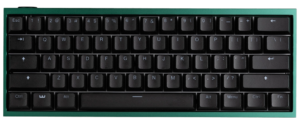
The Wooting 60HE+ is one of those products that quietly bends an entire category around itself. On paper, it looks like a small, minimal keyboard with fewer keys than a traditional full-size board. In reality, it is a strange little piece of hardware that changed how people think about keyboard input in competitive games. The secret is in the Hall effect switches. Instead of relying on physical contacts, these switches use magnets and sensors to detect how far down a key is pressed. That means actuation points can be adjusted in software, and keys can register input faster and more precisely than traditional mechanical switches. This matters in a way that is hard to explain until you feel it. In fast-paced games, especially shooters, small delays and inconsistent actuation points can stack up into tiny mistakes. The Wooting feels like it removes friction between intention and action. You press a key and it responds exactly how you expect, without that vague mechanical “maybe now, maybe later” feeling some switches have. Movement feels cleaner. Strafing feels more controlled. Stopping feels instant instead of floaty. It does not suddenly make you a better player, but it removes excuses. When you miss a movement or mistime a peek, you know it was you, not the keyboard. Outside of gaming, the Wooting is surprisingly comfortable to type on. The switches feel smooth and consistent, and because you can tune actuation points, you can make the keyboard softer for typing or more aggressive for gaming. The 60% layout forces a learning curve. You lose dedicated arrow keys and function rows, which can be annoying at first. But over time, it encourages cleaner desk setups and more intentional hand movement. It becomes a keyboard that asks you to commit to it. If you do, it rewards you with a feeling of control that most mainstream gaming keyboards simply do not offer. The build quality is solid without being flashy. It does not try to look like a spaceship. It just sits on your desk and does its job extremely well. There is something refreshing about that in a market full of over-designed plastic monsters with RGB vomit and twelve fonts fighting for attention. The Wooting feels like a tool first and a product second. That is probably why it became so popular among competitive players. Not because it looks cool, but because it feels honest.
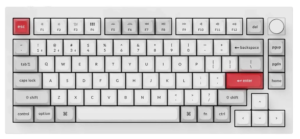
KEYCHRON Q1 PRO The Keyboard for People Who Type More Than They Admit
The Keychron Q1 Pro lives in a completely different emotional space than the Wooting. This is not a keyboard built around speed and competitive advantage. This is a keyboard built around comfort, sound, and long-term use. It is heavy. Properly heavy. When you put it on your desk, it stays there. The aluminum case gives it a sense of permanence, like it belongs in that spot. It does not slide around when you get frustrated and start typing faster than your brain can keep up. Typing on the Q1 Pro feels deliberate. The switches, especially if you choose a tactile or linear option you like, land with a satisfying weight. The sound is muted and deep instead of clicky and sharp. This matters more than people think. A keyboard that sounds harsh can slowly become annoying, even if you like it at first. The Q1 Pro sounds like something you can live with for years. It does not scream for attention. It just quietly exists and lets you work. The tri-mode connectivity is one of those features you do not care about until you suddenly do. Being able to switch between wired, 2.4 GHz wireless, and Bluetooth makes the keyboard fit into messy modern setups. One moment it is connected to your desktop, the next to a laptop or tablet. The transition feels natural, and it reduces friction in daily use. You stop thinking about cables and start thinking about tasks. That sounds boring, but boring is good when it comes to tools you use every day. Hot-swappable switches add another layer of long-term value. You can change how the keyboard feels without replacing the entire board. Over time, your preferences might shift. Maybe you want something lighter. Maybe you realize you type better on tactile switches than on linear ones. The Q1 Pro lets you explore that without committing to a whole new keyboard. It becomes a platform rather than a fixed product. This keyboard is not about winning matches. It is about making the hours you spend in front of your PC feel less tiring. It supports writing, coding, chatting, and gaming without trying to dominate any single category. In a way, it is the opposite of flashy gaming gear. It respects your time instead of trying to impress you with aggressive design.
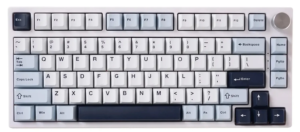
GAMAKAY TK75HE V2 The Magnetic Switches That Make Sense for Normal People
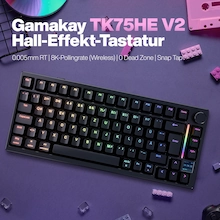
Magnetic Hall effect keyboards often sound like sci-fi marketing until you try one. The Gamakay TK75HE V2 brings that technology into a more approachable price range and format. It does not pretend to be the ultimate competitive keyboard, but it offers many of the same benefits that make magnetic switches interesting in the first place. Adjustable actuation, smoother key travel, and longer-lasting switch performance because there are no physical contacts wearing down in the same way. What makes the TK75HE V2 stand out is that it does not feel like a prototype. It feels like a finished product meant to be used every day. The 75% layout keeps most of the keys people actually need while saving desk space. You get arrow keys, navigation keys, and a compact footprint that works well for both gaming and work. It sits in that sweet spot where nothing feels missing, but nothing feels excessive either. The typing experience is smooth in a way that is hard to describe without touching it. The keys feel consistent across the board, without those random stiff or loose keys that sometimes appear on cheaper mechanical keyboards. The magnetic switches give a slightly different feedback than traditional mechanical ones, not better or worse, just different. Some people love that difference immediately. Others take a few days to get used to it. Once you adjust, it feels natural. RGB lighting is present but not overwhelming. The board looks modern without screaming for attention. It fits into gaming setups, but it also does not look out of place in a more minimal desk environment. That balance is harder to achieve than it sounds. Many gaming keyboards feel awkward in clean setups, like they are trying too hard to be edgy. The Gamakay avoids that trap by being simple and functional. As an entry point into magnetic switch keyboards, the TK75HE V2 makes sense. It gives you a taste of next-generation input without forcing you into the high-end niche immediately. For people who are curious about Hall effect technology but do not want to jump straight into the most expensive options, this keyboard feels like a reasonable step forward rather than a reckless leap.
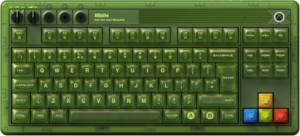
8BITDO RETRO 87 The Keyboard That Brings Personality Back to the Desk
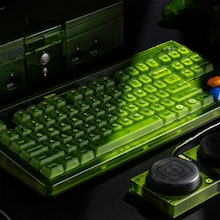
The 8BitDo Retro 87 exists in a space most keyboards ignore: emotional design. It does not just try to be good at typing or gaming. It tries to make your desk feel like something personal. The retro aesthetic is not just a gimmick. It taps into a strange nostalgia for a time when hardware felt more physical, more playful, less obsessed with aggressive gamer branding. Typing on the Retro 87 feels surprisingly solid. The switches are responsive and consistent, and the tenkeyless layout keeps things compact without feeling cramped. It is comfortable for long sessions, and the build quality feels better than what the playful design might suggest at first glance. This is not a toy. It is a serious keyboard that just happens to look like it has a sense of humor. There is something refreshing about using a keyboard that does not take itself too seriously. In a room full of black rectangles with RGB accents, the Retro 87 stands out without trying to dominate the space. It becomes a conversation piece. People notice it. Not because it is loud, but because it feels different. That matters more than raw specs for some users. Your setup is not just a toolset. It is part of your personal space. For gaming, the Retro 87 is perfectly capable. It does not offer exotic features like adjustable actuation points, but it delivers reliable performance. The keys feel predictable, and the layout leaves enough room for mouse movement. It is the kind of keyboard you can use for hours without thinking about it, which is usually the highest compliment you can give to input devices. This keyboard is for people who want their desk to feel human instead of purely optimized. It reminds you that PCs can be playful again, not just optimized machines for extracting performance from every corner of your life.
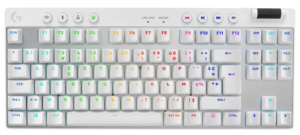
LOGITECH G PRO X TKL The Boring Choice That Works Every Time
The Logitech G Pro X TKL is not exciting. That is exactly why it deserves a place on this list. It is a keyboard that does its job so consistently that it fades into the background. For competitive players, that is ideal. You do not want to think about your keyboard when things get intense. You want it to disappear and let you focus on the game. The tenkeyless layout is practical for gaming. It frees up desk space and keeps your hands closer together, which can reduce fatigue during long sessions. The switches are responsive and reliable, and the hot-swappable design lets you change them without buying a new keyboard. That adds a layer of long-term flexibility most mainstream gaming boards lack. The build quality is solid, and the design is clean. It looks like a tool, not a toy. The detachable cable and compact form factor make it easy to move around, which is why so many players use similar boards at events and tournaments. Even if you never plan to take your keyboard anywhere, that portability translates into a feeling of purpose. This keyboard was designed to be used, not just displayed. There is no flashy innovation here. No experimental switch technology. No dramatic design statements. Just a reliable piece of gear that works every day. Sometimes that is exactly what people need. Not every part of a setup has to be exciting. Some parts just have to be dependable.