
LARIAN STUDIOS REVISITS DIVINITY, THE WORLD THAT STARTED IT ALL
That single sentence already carries weight. After years spent in the gravity well of Baldur’s Gate, after awards, numbers, headlines, and the kind of success that permanently changes a studio’s trajectory, Larian has finally said it out loud: the Divinity universe is not finished. A new Divinity game is in development, marking a deliberate step back into the world that defined the studio long before global spotlights and Game of the Year trophies followed them everywhere. The announcement itself was restrained. No cinematic trailer, no explosive gameplay reveal, no promise-heavy marketing language. Just confirmation. Calm, confident, almost casual. And that tone matters. It suggests a studio that knows exactly what it’s doing and, more importantly, what it doesn’t need to do anymore.
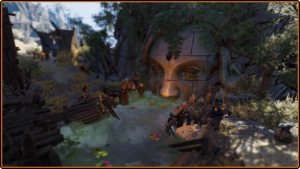
For long-time fans, Divinity isn’t just another IP in Larian’s catalogue. It’s the foundation. Original Sin was where the studio learned how to build systems that talk to each other, how to let player choice breathe, how to turn turn-based combat into something expressive instead of mathematical. Baldur’s Gate 3 refined those ideas, polished them, and introduced them to a massive audience. But Divinity was always the playground. The place where experimentation felt natural rather than constrained by legacy. That’s why this return feels different from a sequel announcement. It feels like a reclaiming. Larian has not confirmed whether the new project is Divinity: Original Sin 3 or something structurally different set in the same universe. And that ambiguity is probably intentional. The Divinity world allows flexibility that Baldur’s Gate never could. It isn’t bound by tabletop expectations or decades of established canon. It can evolve. It can surprise. It can break its own rules if needed. What’s especially telling is the timing. Larian could have chased the obvious path: more D&D, more licensed worlds, more external universes. Instead, they chose to go home. That suggests confidence, not retreat. A belief that their own universe, shaped now by years of hard-earned design maturity, can stand shoulder to shoulder with anything else in the genre.
There’s also a quiet promise hidden inside this move. Divinity has always been slightly stranger, slightly darker, slightly more willing to lean into the absurd alongside the tragic. It allows humor without undercutting drama. It allows chaos without losing coherence. In a post-Baldur’s Gate 3 world, a new Divinity has the potential to feel less like a follow-up and more like a statement: this is what Larian looks like when it answers only to itself. For now, details are scarce. No platforms. No release window. No screenshots. And that’s fine. This is news, not spectacle. The important part isn’t what was shown, but what was confirmed. Divinity isn’t being left behind as a stepping stone. It’s being brought forward, reshaped by everything the studio has learned. If Baldur’s Gate 3 was Larian proving they could handle someone else’s legend, the next Divinity feels like a chance to redefine their own.