
CLASSIC GAMES | WARCRAFT III | A WORLD THAT CHANGED REAL-TIME STRATEGY
Some games age quietly. They fade into the background, remembered vaguely, like places you once visited but can no longer describe with confidence. Warcraft III does the opposite. It ages loudly, stubbornly, refusing to be reduced to nostalgia alone. Even today, years after its release, it still feels present. Not because of graphics or mechanics that somehow defied time, but because of the way it settled into the collective memory of players and refused to leave. Warcraft III wasn’t just a game you played. It was a period of life. A stretch of evenings, weekends, school nights, internet cafés, shared CDs, cracked installers, LAN cables running across rooms, and that unmistakable feeling when the Blizzard logo appeared on screen and you knew you were about to enter a world that demanded your full attention. Not in a flashy, overstimulating way, but in a slow, deliberate, almost literary manner. At the time, it didn’t announce itself as revolutionary. It simply felt different. Quieter where others were loud. Slower where others rushed. More interested in people than in numbers. And that difference, subtle at first, ended up changing not only real-time strategy games, but entire genres that didn’t even exist yet.
A Strategy Game That Wanted You to Care
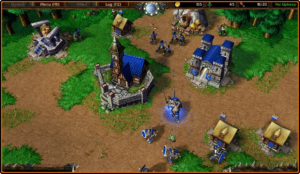
Before Warcraft III, many strategy games treated narrative as a framing device. A justification for why two sides were fighting, why maps looked the way they did, why missions escalated in difficulty. Warcraft III inverted that relationship. The gameplay existed to serve the story just as much as the story served the gameplay. From the opening moments of Reign of Chaos, the game establishes a tone that feels unusually personal for an RTS. You’re not thrown into a global conflict with abstract factions. You’re introduced to individuals. Arthas. Thrall. Jaina. Characters who speak, doubt, argue, and make decisions that feel heavy even when they are technically just dialogue between missions. This focus on character does something subtle but powerful. It reframes your actions on the battlefield. You’re no longer just managing resources and unit production. You’re participating in someone’s story, and sometimes that story is deeply uncomfortable. Victories don’t always feel triumphant. Losses don’t always feel like failures. The game constantly blurs the line between progress and moral decline. That was rare. Even bold. Strategy games weren’t supposed to make you uneasy about doing exactly what they asked you to do. Warcraft III did that repeatedly, and it never apologized for it.
Arthas Menethil and the Slow Collapse of Certainty
It’s impossible to talk about Warcraft III without eventually circling back to Arthas. His story isn’t just memorable; it’s foundational to why the game still matters. Arthas works because he doesn’t start as a villain, and more importantly, he doesn’t become one overnight. He begins as an archetype you’ve seen before: the young, idealistic prince, eager to prove himself, genuinely concerned for his people. There’s no irony in his early actions. No wink to the audience. When he takes up arms against the Scourge, it feels justified. Necessary, even. What Warcraft III does masterfully is let that justification rot slowly. Each decision Arthas makes is understandable in isolation. Each compromise feels small when viewed on its own. The game never forces you into a single, obvious “evil” moment until it’s far too late to pretend things could have gone differently. The Stratholme mission is often cited as the turning point, and rightly so. Not because of its shock value, but because of how it implicates the player. You are not watching Arthas purge the city. You are doing it. The game doesn’t offer an alternate route. It doesn’t soften the blow with cutscenes. It simply hands you control and waits. That moment lingers because it exposes something uncomfortable about games as a medium. You’re used to following objectives without questioning them. Warcraft III breaks that habit. It forces you to confront the cost of obedience, even when the logic seems sound. By the time Frostmourne enters the picture, Arthas’ fate feels sealed, but not in a cheap, predetermined way. It feels earned. Tragic. The sword doesn’t corrupt him so much as it crystallizes everything he has already become. His fall isn’t a twist. It’s a conclusion.
Thrall, Identity, and the Search for Meaning
Where Arthas represents obsession and loss of self, Thrall represents the opposite struggle: the search for identity. The Orc campaign in Warcraft III is quieter, more introspective, and in many ways more hopeful, even as it deals with exile, shame, and cultural collapse. Thrall is not driven by conquest. He is driven by memory and responsibility. He carries the weight of a people who have lost their way, and his journey is about reclaiming dignity rather than power. That distinction matters. It gives the Orc campaign a spiritual quality that contrasts sharply with the desperation of the Human storyline.This contrast is one of Warcraft III’s greatest strengths. The game doesn’t present a single moral lens. Each faction interprets the world differently. Each has its own values, fears, and blind spots. You’re not asked to pick a side and stick with it. You’re asked to understand all of them. Thrall’s arc also reinforces one of the game’s central themes: that history is cyclical, but not immutable. Choices matter, not because they guarantee success, but because they define who you are in the face of inevitable change.
The Undead, the Night Elves, and Moral Asymmetry
The Undead campaign is where Warcraft III allows itself to be openly cruel. There’s no attempt to humanize the Scourge in the same way other factions are humanized. Instead, the game leans into manipulation, betrayal, and calculated malice. And yet, even here, characters like Kel’Thuzad and Sylvanas exhibit motivations that go beyond simple evil. Playing as the Undead feels transgressive. You exploit corpses. You corrupt land. You dismantle established power structures. The mechanics reinforce the narrative, creating a sense of alignment between what you do and who you are supposed to be. The Night Elves, by contrast, feel ancient and detached. They are less concerned with politics and more with balance. Their campaign introduces a different pace, one rooted in defense, patience, and long-term thinking. They don’t rush to war. They endure. What makes this factional design so effective is that none of these perspectives feel redundant. Each campaign recontextualizes the others. Events you witnessed earlier take on new meaning when seen from a different angle. The world feels layered, not linear.
Heroes and the Reinvention of RTS Gameplay
Mechanically, Warcraft III took risks that many RTS developers would have avoided. The introduction of heroes fundamentally altered how the genre played. Suddenly, battles weren’t just about massing armies. They were about positioning, timing, and protecting key individuals. Heroes gained experience, learned abilities, and carried items, blurring the line between strategy and role-playing. This shift did more than add complexity. It changed how players emotionally engaged with the game. Losing a hero felt worse than losing dozens of units. Victory felt hollow if it came at the cost of a character you had nurtured over multiple missions. This design choice slowed the game down in a meaningful way. Warcraft III demanded attention. You couldn’t simply macro your way to success. You had to watch the battlefield. You had to react. You had to care. Creeping and neutral camps added another layer of strategy, encouraging map control and exploration. Maps became living spaces rather than static arenas. This sense of spatial awareness would later become central to entirely new genres, but at the time it simply made Warcraft III feel deeper than its peers.
The Frozen Throne and Narrative Confidence
The Frozen Throne didn’t try to reinvent Warcraft III. It refined it. The expansion displayed a level of narrative confidence that few games have ever achieved. It trusted players to remember events, to recognize themes, to connect dots without constant reminders. Illidan Stormrage emerged as one of the most compelling figures in the expansion, precisely because he defied easy categorization. Neither hero nor villain, he embodied obsession, sacrifice, and isolation in a way that mirrored Arthas while remaining distinct. The conclusion of Arthas’ story was handled with restraint. There was no grand moral reckoning, no redemptive arc. Just silence, cold, and inevitability. It felt appropriate. It felt honest. Mechanically, The Frozen Throne polished balance and introduced systems that deepened tactical play without overwhelming it. It felt like a game that knew exactly what it wanted to be and refused to overextend.
Custom Maps and Accidental Immortality
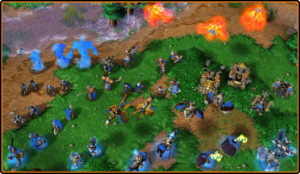
Perhaps the most enduring legacy of Warcraft III lies outside its official campaigns. The custom map editor opened doors that Blizzard may not have fully anticipated. Players didn’t just create variations on existing gameplay. They created entirely new experiences. Tower defense maps, hero arenas, role-playing scenarios, and eventually, Defense of the Ancients emerged from this ecosystem. What began as experimentation turned into a movement. Genres were born not from design documents, but from community curiosity. This wasn’t just modding. It was authorship. Warcraft III gave players tools and trusted them to use them creatively. That trust paid off in ways that reshaped the industry. What made this phenomenon so powerful was not only the tools themselves, but the culture that formed around them. Custom maps were shared, discussed, refined, broken, rebuilt, and passed along like living ideas rather than finished products. There was no clear boundary between player and designer anymore. Anyone with enough patience and imagination could leave a mark. Balance patches didn’t come from developers but from community consensus. Concepts evolved organically, shaped by thousands of matches played by people who simply wanted something new. Warcraft III became less a single game and more a platform, a fertile ground where creativity thrived without permission. Long before “user-generated content” became a marketing term, Warcraft III quietly proved that giving players freedom was not a risk, but an investment one that would echo through the industry for decades.
Atmosphere, Sound, and the Texture of Memory
Warcraft III’s audiovisual design is inseparable from its identity. The music doesn’t just accompany gameplay; it defines it. Each faction’s themes reinforce their worldview, subtly shaping how you perceive them long before the story spells anything out. The sound design gives weight to actions, making even small decisions feel significant, whether it’s the clash of steel, the crackle of magic, or the quiet tension before a battle begins. Voice acting, while not flawless, achieved something more important than technical perfection: memorability. Unit responses became cultural touchstones, quoted, parodied, and remembered years later. Those voices didn’t just serve function; they gave personality to what could have been disposable units. Visually, the game’s stylized approach allowed it to age with a kind of dignity few early-2000s titles managed to achieve. Warcraft III never chased realism, and that restraint proved wise. Exaggerated proportions, clear silhouettes, and expressive animations ensured that everything on screen remained readable even in the chaos of battle. More importantly, the art direction created a world that felt cohesive rather than impressive for its time. Colors, lighting, and environments worked together to evoke mood instead of technical prowess. As a result, returning to Warcraft III today feels less like stepping into something outdated and more like opening an old illustrated book its pages worn, perhaps, but its imagery still vivid, familiar, and emotionally loaded with memory.
Imperfections That Humanize the Experience
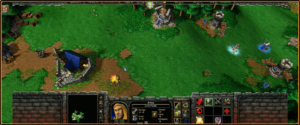
Warcraft III has flaws, and acknowledging them doesn’t diminish its impact. Camera limitations could be frustrating. Pathfinding sometimes betrayed you at critical moments. Certain missions leaned too heavily on scripted gimmicks. But these imperfections feel almost endearing now. They remind you that the game was ambitious, not sterile. It reached for something bigger than technical polish alone. The later controversies surrounding the game’s legacy complicate its modern perception, but they do not erase what the original achieved. Warcraft III is not defined by what came after. It is defined by what it was when it mattered most.
Why Warcraft III Endures
Warcraft III endures because it respected its audience. It trusted players to think, to feel, and to sit with discomfort rather than rushing them toward easy conclusions. The game refused to reduce its conflicts to simple binaries of good and evil, choosing instead to explore obsession, loss, duty, and moral compromise. Tragedy was treated with seriousness, allowed to unfold gradually, while moments of victory were handled with restraint rather than spectacle. This tonal maturity gave weight to every decision and made the consequences feel earned rather than scripted. More importantly, Warcraft III proved that a strategy game could be intimate. Heroes were not untouchable icons but flawed figures capable of failure, doubt, and irreversible mistakes. Stories unfolded slowly, trusting the player’s patience and attention instead of relying on constant escalation. In doing so, the game laid foundations that countless developers would later build upon, often without fully realizing where those ideas first took shape. Revisiting Warcraft III today is not an exercise in nostalgia. It is a reminder of a moment when games were confident enough to slow down, embrace complexity, and ask more of the player than fast reactions or surface-level engagement.