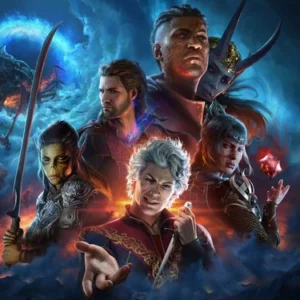
HBO PREPARES A BALDUR’S GATE TV SERIES | THE FORGOTTEN REALMS ON THE SCREEN
The world of Baldur’s Gate has always felt bigger than the screen it lived on. Even when it was locked inside isometric views and dialogue windows, it carried the weight of long journeys, personal choices, and quiet moments that stayed with you long after you closed the game. Now, with HBO reportedly moving forward with a Baldur’s Gate TV series, that world is stepping out of the PC space and into mainstream television. On paper, this sounds like one of those announcements that instantly divides people into two camps: those who are excited to see their favorite fantasy universe finally treated like a serious story, and those who already expect disappointment because games and TV rarely understand each other on the first try.
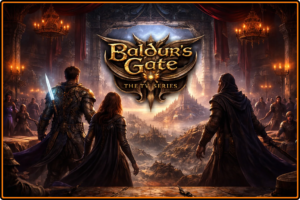
Baldur’s Gate is not just another fantasy IP you can turn into a show by throwing some armor, magic effects, and dramatic music at the screen. It is built on slow world-building, morally grey decisions, and companions who feel less like side characters and more like people you traveled with. Translating that into a TV format is not about spectacle first, but about tone. The Forgotten Realms work when the story takes its time, when characters breathe, when danger feels earned instead of rushed. HBO’s involvement is what gives this project a bit of weight, because their strongest series have always understood that pacing and character matter more than constant action. If Baldur’s Gate becomes another loud fantasy show that forgets why people cared about the world in the first place, it will miss the point entirely.
There is also the question of what part of Baldur’s Gate they will actually adapt. The name carries decades of lore, multiple eras, and wildly different tones depending on whether you are thinking about the older classics or the modern revival. A direct adaptation of any single game risks alienating parts of the fanbase, while a completely new story set in the same universe risks feeling disconnected if it ignores what made the setting special. The safest creative path is probably the hardest one: tell a new story in the Forgotten Realms that respects the spirit of Baldur’s Gate without trying to recreate specific player choices on screen. The strength of the games was never just the plot. It was the feeling that the world reacted to you. A TV series cannot replicate that, but it can at least capture the sense of consequence, tension, and quiet intimacy between characters.
What makes this announcement interesting for PC players is not just the show itself, but what it says about how far game worlds have come. Baldur’s Gate used to be something you explained to people who did not play games. Now it is a property big enough to be considered “TV material” by a network known for high-profile drama. That shift matters. It means PC-first worlds are no longer treated as niche. They are becoming part of the wider pop culture conversation, for better or worse. The risk is obvious: mainstream exposure often simplifies complex worlds to make them more accessible. The opportunity is just as real: done right, this could introduce a new audience to a setting that has always deserved more attention than it got outside gaming circles.
There is a quiet fear many long-time fans carry with them into projects like this. Not the fear that the show will be bad in a technical sense, but that it will be shallow. Baldur’s Gate is not remembered because of explosions or flashy set pieces. It is remembered because of companions you argued with, decisions you regretted, and moments of stillness that made the world feel real. If the series understands that, it has a chance to become more than just another fantasy show wearing a famous name. If it does not, it will probably be forgotten as quickly as it was announced. For PC players, the best approach might be cautious curiosity. Let the series exist on its own terms. If it succeeds, it could become one of those rare adaptations that respect their source without trying to replace it. If it fails, the games will still be there, unchanged, waiting to be replayed the way they were meant to be experienced. In the end, Baldur’s Gate does not need television to matter. But if television gets it right, the Forgotten Realms might finally feel as large on the screen as they always did in our heads.