REVIEW | 8BITDO RETRO 87 | A KEYBOARD THAT KNOWS ITS ROLE
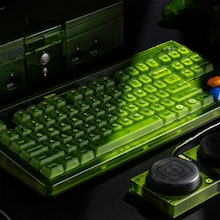
Mechanical keyboards have reached a point where raw functionality alone is no longer enough. Switch quality, layout, and connectivity are now expected basics, not selling points. What increasingly defines a keyboard today is how well it understands its purpose and audience. The 8BitDo Retro 87 mechanical keyboard positions itself as a product that deliberately avoids extremes. It does not try to outgun enthusiast customs nor compete with hyper-aggressive esports boards. Instead, it presents a carefully restrained design philosophy that blends retro visual identity with modern mechanical fundamentals, aiming to serve as a reliable, long-term daily keyboard rather than a novelty or status symbol. At its core, the Retro 87 is about balance. It seeks to provide a comfortable typing and gaming experience without unnecessary complexity, while offering enough modern features to justify its place in a contemporary setup. This approach makes it particularly interesting, because it challenges the assumption that a keyboard must either be a minimal office tool or a highly specialized enthusiast device. The question is not whether the Retro 87 does everything, but whether it does the right things well enough to earn a permanent spot on the desk.
Design Philosophy and Retro Identity
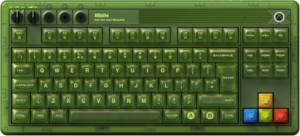
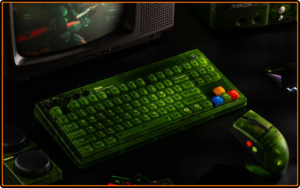
The first thing anyone notices about the 8BitDo Retro 87 is its aesthetic direction. Unlike many keyboards that rely on RGB saturation or angular “gaming” motifs, this board draws inspiration from classic computing and console peripherals. The color scheme, keycap legends, and overall visual tone clearly reference earlier eras of hardware design, but the execution is disciplined. This is not nostalgia for the sake of novelty; it is nostalgia applied with intent. The casing avoids excessive ornamentation. Its surfaces are clean, with subtle contours that feel deliberate rather than decorative. The keyboard does not attempt to mimic a specific vintage device outright, which helps it avoid looking like a replica. Instead, it borrows the emotional language of retro hardware while maintaining modern proportions and ergonomics. As a result, it integrates surprisingly well into both minimalist and gaming-oriented setups. Key legends are legible and thoughtfully spaced. They emphasize clarity over stylization, which supports extended typing sessions without visual fatigue. The overall impression is that of a keyboard designed to be looked at every day without becoming visually exhausting. That restraint is one of its strongest design achievements.
Build Quality and Structural Integrity
From a physical standpoint, the Retro 87 communicates solidity the moment it is placed on a desk. The chassis has enough weight to prevent sliding during use, even during aggressive typing or gaming sessions. There is no noticeable flex when pressure is applied across the board, which suggests a well-supported internal structure rather than cost-cutting compromises. The materials used in the casing strike a practical balance between durability and tactile comfort. The surface finish resists fingerprints and minor wear better than glossy alternatives, contributing to the keyboard’s long-term usability. This is important for a device intended to function as a daily driver rather than a display piece. Attention to structural stability becomes especially apparent during extended use. The keyboard remains firmly planted, and the consistent feel across its surface reinforces confidence in its build. There is no sense that certain areas are weaker or less supported, which is something even more expensive keyboards sometimes struggle with.
Layout and Form Factor Considerations
The tenkeyless 87-key layout is a strategic choice that aligns well with the Retro 87’s intended use case. By removing the numpad, the keyboard achieves a more compact footprint without sacrificing essential functionality. This makes it easier to fit into a wide range of desk setups, particularly those where mouse space is a priority. Navigation keys and function rows are retained, preserving familiarity for users transitioning from full-size keyboards. This layout minimizes the learning curve while still offering the ergonomic benefits of reduced width. For both productivity and gaming, the 87-key format proves to be a sensible compromise. Key spacing and alignment adhere to standard mechanical keyboard conventions, which further reduces friction during adoption. Muscle memory transfers cleanly, allowing users to focus on the typing experience rather than adjusting to an unconventional layout.
Switch Feel and Typing Experience
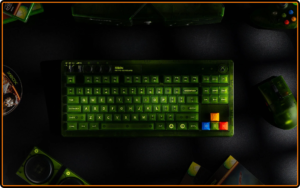
The typing experience is where the Retro 87 reveals its practical priorities. Switch behavior is tuned toward consistency and control rather than extremes. Actuation feels predictable, with a stable resistance curve that supports both fast keystrokes and deliberate typing. There is minimal wobble across the keys, contributing to a sense of precision during input. This stability is especially noticeable during longer typing sessions, where uneven switch behavior can quickly become fatiguing. The Retro 87 avoids that pitfall by maintaining uniformity across the board. The sound profile is restrained. Keystrokes produce a controlled, relatively muted tone that avoids the hollow resonance often associated with cheaper mechanical keyboards. This makes the board suitable for shared environments or office use, where excessive noise can be disruptive.
Stabilizers and Large Key Performance
Stabilizer performance is often a defining factor in how “premium” a keyboard feels in practice, regardless of its price. In this regard, the Retro 87 performs confidently within its category. Larger keys such as the spacebar, enter, and shift exhibit minimal rattle and consistent resistance across their travel. The spacebar, in particular, maintains a clean actuation without the uneven feel that plagues many mid-range keyboards. This contributes significantly to overall typing satisfaction, as the spacebar is one of the most frequently used keys. While the stabilizers may not match the refinement of hand-lubed custom setups, they are well above average for a prebuilt keyboard. Their performance reinforces the Retro 87’s identity as a thoughtfully assembled product rather than a mass-produced compromise.
Connectivity Options and Wireless Performance
One of the Retro 87’s most practical strengths lies in its connectivity flexibility. The keyboard supports both wired and wireless operation, allowing it to adapt to different usage scenarios. Switching between modes is straightforward and does not interrupt workflow or require cumbersome re-pairing processes. Wireless performance is stable and responsive. Input latency remains low enough for gaming, including fast-paced titles where timing is critical. There are no noticeable dropouts or inconsistencies during extended sessions, which is essential for a keyboard positioned as an all-purpose device. The wired mode provides a reliable fallback for situations where absolute stability is required, such as competitive gaming or professional work environments. This dual-mode approach enhances the keyboard’s versatility without adding unnecessary complexity.
Battery Life and Power Management
Battery life is another area where the Retro 87 emphasizes practicality. In wireless mode, the keyboard comfortably supports extended use without frequent charging. This reduces maintenance overhead and reinforces its role as a dependable daily tool. Charging is straightforward, and the keyboard does not require constant monitoring to avoid unexpected power loss. For users who alternate between wired and wireless use, battery management remains largely transparent, which is exactly how it should be.
Software and Customization Capabilities
The Retro 87’s software approach mirrors its hardware philosophy: functional, restrained, and accessible. Customization options focus on essential features such as key remapping rather than deep macro scripting or elaborate lighting control. This will be sufficient for most users, particularly those who value simplicity and reliability over extensive personalization. While advanced users may find the software limited compared to enthusiast-oriented solutions, the trade-off is a cleaner, more focused experience that avoids overwhelming complexity.
Gaming Performance and Real-World Use
In gaming scenarios, the Retro 87 performs reliably across a range of genres. Key response is consistent, and the layout supports efficient movement and action input. The absence of a numpad frees additional mouse space, which is particularly beneficial in competitive shooters and action-heavy titles. The keyboard does not introduce distractions through excessive lighting effects or gimmicks, allowing users to remain focused on gameplay. This understated approach may not appeal to those who prioritize visual flair, but it aligns well with the keyboard’s overall identity.
Long-Term Comfort and Ergonomics
Comfort is one of the Retro 87’s most understated strengths. The typing angle and key height support neutral wrist positioning, reducing strain during long sessions and helping maintain a relaxed hand posture over time. Key resistance is evenly balanced, which minimizes finger fatigue during extended typing or repetitive in-game inputs. While the keyboard does not reinvent ergonomics or rely on aggressive sculpting, it executes the fundamentals with consistency and restraint. Over long-term use, this predictability becomes more valuable than flashy features. The Retro 87 feels like a keyboard that can remain on a desk for years, supporting daily work and gaming without demanding attention, recalibration, or constant physical adjustment.
Market Positioning and Value Proposition
The Retro 87 occupies an interesting space in the mechanical keyboard market. It does not chase the lowest price, nor does it justify a premium through exclusivity. Instead, it offers a carefully curated feature set aimed at users who want a reliable, visually distinctive keyboard without committing to the enthusiast rabbit hole. Its value lies in cohesion. Design, build quality, typing feel, and connectivity all work together without contradiction. This coherence is often missing in keyboards that attempt to appeal to everyone at once.