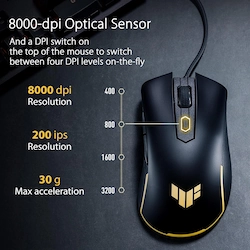
REVIEW | ASUS TUF GAMING M3 GEN II | SMALL TOOL, BIG INTENTIONS
The ASUS TUF Gaming M3 Gen II is not a mouse that tries to impress you at first glance. It doesn’t arrive with the kind of dramatic promises that high-end gaming mice love to shout about. No exaggerated claims of “pro-level dominance,” no talk of esports destiny, no attempt to convince you that buying it will suddenly make your aim sharper or your reaction time faster. And honestly, that’s exactly why this mouse exists. This is a mouse made for people who just want something reliable under their hand. People who play games because they enjoy them, not because they chase rankings or hardware validation. People who sit down at their PC after work, after stress, after a long day, and want their mouse to simply behave. No drama, no surprises, no constant reminders that it’s “budget.” The M3 Gen II feels like a product born out of restraint. ASUS clearly knew where to stop. They didn’t try to turn it into something it’s not. They focused on shape, weight, durability, and basic performance, and left the rest alone. In a market full of mice that try to be everything at once, that alone already makes it stand out. I didn’t approach this mouse with excitement. I approached it with curiosity. And that difference matters, because curiosity is how you notice the small things that actually make or break daily use.
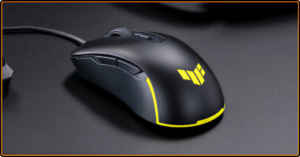
First Contact and Physical Presence
When you take the ASUS TUF Gaming M3 Gen II out of the box, the first thing you notice is how light it feels. Not “cheap light,” not hollow or fragile, but deliberately light. There’s no unnecessary bulk here, no inflated shell trying to mimic premium heft. It feels like something designed to move, not to sit proudly on a desk as a statement piece. The shape is conservative in the best way possible. It doesn’t aggressively force your hand into a specific grip style, and that’s one of its biggest strengths. Whether you use palm, claw, or something in between, the mouse adapts without complaint. The body is slightly curved but not exaggerated, offering support without locking your hand in place. The surface texture is subtle. It doesn’t scream “gaming,” but it offers enough grip to stay stable even during longer sessions. There’s no rubber coating that will wear off after a few months, no glossy finish that turns into a fingerprint magnet. It feels practical, intentionally boring, and that’s a compliment. Buttons feel firm and predictable. They don’t have that overly crisp, clicky arrogance that some mice adopt, but they’re responsive and consistent. You always know when you’ve clicked. The scroll wheel sits right where it should, with defined steps that make scrolling precise without feeling stiff or mechanical. This mouse doesn’t try to seduce you. It introduces itself quietly and waits for you to decide whether you trust it. That kind of confidence is rare in budget peripherals.
Living With It Day After Day
The real test of any mouse isn’t the first hour or the first day. It’s the third day, the fifth day, the moment when you stop thinking about it entirely. That’s where the M3 Gen II quietly succeeds. In everyday use, the mouse disappears. That’s the highest praise I can give it. You stop adjusting your grip. You stop compensating for weight distribution. You stop noticing the cable. Your hand just moves, clicks, scrolls, and reacts naturally. The lightweight design makes long sessions noticeably less tiring. Even outside of gaming, during browsing, writing, editing, or general desktop work, the mouse never feels like a burden. There’s no wrist strain building up over time, no subtle discomfort creeping in during extended use. The cable, often a weak point in wired mice, behaves well. It’s flexible enough not to fight against your movements, and it doesn’t constantly remind you that it’s there. This is important, because nothing breaks immersion faster than a cable dragging across your desk like an anchor. The mouse feet glide smoothly on most surfaces. You don’t need a premium mousepad to get consistent movement. It performs just as comfortably on a basic desk mat as it does on more refined surfaces. Over time, what becomes clear is that this mouse was designed with routine in mind. It’s not built for moments of showmanship. It’s built for repetition, for muscle memory, for reliability.
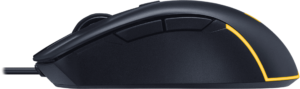
Gaming Without the Noise
Gaming performance is where many budget mice try to overcompensate. They either exaggerate sensitivity, add unnecessary features, or try to mimic professional gear without understanding why those features exist in the first place. The ASUS TUF Gaming M3 Gen II avoids that trap. In gaming scenarios, the mouse feels honest. Tracking is stable. Movements feel direct and predictable. There’s no strange acceleration behavior, no moments where the cursor feels disconnected from your hand. It does exactly what you ask it to do, and nothing more. This is especially noticeable in shooters, where consistency matters far more than raw specs. The mouse doesn’t fight you. It doesn’t exaggerate micro-movements or punish slower playstyles. Whether you’re making quick flicks or controlled tracking movements, it stays composed. In longer gaming sessions, the lightweight design really shines. Fatigue is reduced, which means your performance stays more consistent over time. You’re not battling the mouse itself, only the game. mWhat I appreciate most is that the mouse never tries to convince you it’s something it’s not. It doesn’t pretend to be an esports weapon. It behaves like a dependable tool, and that’s far more valuable for most players.
Durability and Long-Term Confidence
ASUS markets the TUF line as durable, and while marketing terms are easy to throw around, the M3 Gen II actually feels like it can handle daily abuse. The shell doesn’t creak under pressure. Buttons maintain their firmness over time. The scroll wheel doesn’t loosen or develop inconsistencies. There’s a sense that this mouse was designed to survive being used every day, not just showcased in a setup photo. It feels comfortable being thrown into a backpack, moved between desks, used in less-than-perfect conditions. This is the kind of mouse you don’t worry about. You don’t baby it. You don’t feel the need to constantly clean it or protect it from normal wear. It’s there to be used, and it accepts that role fully. That reliability builds trust, and trust is what keeps peripherals on your desk long-term.
Knowing Its Limits
The ASUS TUF Gaming M3 Gen II is not flawless, and pretending otherwise would miss the point of this mouse entirely. It doesn’t offer premium customization. Lighting is minimal. Software features are basic. If you’re someone who enjoys tweaking every detail, this mouse might feel restrained. But those limitations feel intentional rather than forced. ASUS didn’t remove features to cut corners. They removed them to keep the product focused. This mouse knows exactly where it belongs. It doesn’t chase trends. It doesn’t try to impress reviewers with spec sheets. It exists to serve a purpose, and it does so quietly.
A Mouse Built for Everyday Reality
What becomes increasingly clear the longer you live with the ASUS TUF Gaming M3 Gen II is that it was designed with everyday reality in mind, not ideal conditions. This is not a mouse that assumes a perfect desk, a premium mousepad, a carefully calibrated setup, and uninterrupted gaming sessions. It feels comfortable in messy environments, in shared spaces, in setups that change and evolve over time. One day it’s used for gaming, the next for browsing, writing, editing, or simply killing time late at night. And through all of that, it remains consistent. There is something quietly reassuring about a peripheral that does not demand attention. You don’t feel the need to constantly adjust DPI settings. You don’t feel pressured to optimize grip or posture. You don’t feel like you’re underutilizing its potential. The mouse adapts to you, not the other way around. That dynamic is often overlooked in reviews that focus heavily on specifications, but it is exactly what matters most in long-term use. During extended desktop work, the M3 Gen II proves just as capable as it does in games. Text selection feels precise. Scrolling is controlled and predictable. Small cursor adjustments are easy, which is something that cheap mice often struggle with. There is no jitter, no random micro-movements that make your hand tense up. It feels calm. And calm is a quality that becomes invaluable once you notice it. Switching back and forth between work and gaming highlights one of the mouse’s strongest traits: neutrality. It doesn’t favor one use case at the expense of another. It doesn’t feel like a gaming mouse pretending to be a productivity tool, nor like an office mouse awkwardly dressed up for gaming. It sits comfortably in the middle, and that balance makes it surprisingly versatile. The longer you use it, the more you realize that this mouse is not trying to be memorable through novelty. It’s trying to be remembered through absence of frustration. No sudden issues. No degradation in feel. No moments where you catch yourself thinking, “This would be better if…” That lack of friction is what allows it to quietly earn its place.
Quiet Design in a Loud Market
 There’s also an interesting psychological aspect to using a mouse like this. When hardware doesn’t constantly remind you of its presence, your focus shifts entirely to what you’re doing. In games, that means immersion. In work, that means flow. The M3 Gen II facilitates both by staying out of the way. It doesn’t interrupt, doesn’t distract, doesn’t demand validation. In gaming sessions that stretch for hours, the lightweight design continues to pay dividends. Hand fatigue is noticeably reduced, especially compared to heavier mice that feel impressive at first but gradually wear you down. Here, movement remains effortless even late into a session. That consistency helps maintain performance without conscious effort. The mouse also handles imperfect conditions surprisingly well. Whether your desk surface changes, or your mousepad wears down over time, the M3 Gen II remains predictable. This kind of resilience is rarely highlighted, but it’s crucial for users who don’t want to constantly recalibrate their setup. One of the reasons this mouse feels so honest is that it does not pretend to offer professional-grade features. Instead, it focuses on delivering a stable, comfortable experience for people who just want to use their PC without thinking about their hardware. That humility is refreshing in a market that often prioritizes marketing language over user experience. There is a certain maturity in knowing when to stop adding features. ASUS could have pushed harder on customization, lighting, or software gimmicks. They chose not to. And while some users may see that as a limitation, others will recognize it as intentional restraint. This mouse does not want to be everything. It wants to be dependable. Over time, that dependability becomes its defining trait. You stop worrying about it entirely. It becomes part of your routine, part of your setup in the same way a comfortable chair or a familiar keyboard does. You don’t question it. You don’t second-guess it. It simply works. That kind of relationship with hardware is rare, especially in the budget segment. Too often, affordable peripherals remind you of their compromises. The M3 Gen II, on the other hand, feels complete. Not perfect, but complete. There is also something worth mentioning about how this mouse fits into the broader idea of budget peripherals today. The market has changed significantly. Budget no longer automatically means poor quality. It means selective quality. Choosing where to invest and where to simplify. The M3 Gen II is a clear example of that philosophy executed correctly. Instead of chasing trends, it focuses on fundamentals. Shape, weight, consistency, durability. These are things that don’t go out of style. They don’t depend on software updates or ecosystem lock-ins. They simply remain relevant. Using the mouse over time reinforces the idea that good design often goes unnoticed because it does not demand praise. It simply performs. And in a world full of products that constantly seek validation, that quiet confidence stands out. Even when compared mentally to more expensive mice, the M3 Gen II holds its ground surprisingly well. You may miss some advanced features, but you rarely miss comfort or reliability. And those are the qualities that matter most in daily use. It’s also worth noting that this mouse feels honest about its price. It doesn’t overpromise. It doesn’t create expectations it cannot meet. What it offers, it delivers consistently. That transparency builds trust, and trust is what keeps peripherals in use long after the initial excitement fades. As days turn into weeks, and weeks into months, the mouse settles into its role without friction. It becomes a tool you rely on, not one you think about. And in the end, that is perhaps the highest compliment any piece of hardware can receive. The ASUS TUF Gaming M3 Gen II does not aim to impress reviewers. It aims to support users. And for many people, that distinction will matter more than any specification sheet.