THE LORD OF THE RINGS GAME | WHY MIDDLE-EARTH STILL HAS NO TRUE RPG
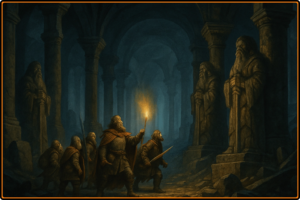
Middle-earth has a way of igniting expectation before anyone even mentions video games, as if the world itself carries an invitation that developers never quite manage to answer. The moment its name appears, the mind runs ahead: ancient halls lit by dying torches, roads carved through kingdoms long buried, silence stretching across fields that once knew the footsteps of giants. The picture forms instantly, natural as breathing, leaving behind an uncomfortable truth players can already feel the world that still doesn’t exist in RPG form. And the more vivid that imagined world becomes, the stranger it feels that no studio has yet stepped forward to claim it. It’s as if Middle-earth remains suspended between possibility and restraint, waiting for a vision bold enough to finally give it shape.
Decades of technological progress should have brought us closer, yet the gap remains stubborn, almost awkward. Studios revisit Tolkien’s universe from time to time, reshaping it into action adventures, cinematic experiences, or hybrid systems that flirt with role-playing without ever surrendering to it. What’s missing isn’t effort but conviction the willingness to build Middle-earth as a living place where choices matter, where stories unfold at the player’s pace, where the depth Tolkien carved into his lore isn’t trimmed down but fully embraced. The audience is ready. The imagination is ready. The world is ready. The RPG simply hasn’t been made. Yes, there were attempts Shadow of Mordor and Shadow of War first among them impressive, bold attempts filled with action, personality, and a Nemesis System that deserved far more respect (and far less legal strangling) than it ever got. But those weren’t RPGs. Not in spirit. Not in structure. They were action games wearing the aesthetic of Middle-earth like a cloak borrowed for the weekend. They moved fast, they killed faster, and they entertained, but they never truly let you live inside Tolkien’s world. Not in the way a role-playing game demands. And that’s the question that keeps hanging in the air: Why does Middle-earth a world begging for an RPG still not have one? When you start peeling away the layers, the answer becomes a complex, knotted tangle of lore constraints, licensing chaos, philosophical incompatibility, fear of fan backlash, and a strange reverence for Tolkien that borders on sacred guardianship. To understand why the perfect LOTR RPG still doesn’t exist, you have to step into the history behind the rights, the nature of Tolkien’s storytelling, and the expectations of a fanbase unlike any other in pop culture.
A world that resists being just another IP
Unlike most fantasy universes that eventually grow into sprawling shared sandboxes, Middle-earth never became an open canvas in the way people expect. Tolkien designed his world to behave like mythology, not entertainment. Every mountain, every forest, every ruined staircase half-buried under moss carries deliberate history. Every race has philosophical roots, not just biological differences. Every moral choice points toward a thematic truth, not a branch in a questline. And the deeper one goes, the more obvious it becomes that Middle-earth was never meant to be bent the way video game worlds usually are. Games especially modern RPGs rely on two pillars: player freedom and systemic flexibility. You choose your path, shape your identity, influence factions, change destinies, and bend the world around you. Middle-earth opposes this at a fundamental level. Its rules are ancient and stubborn. Its storylines are fixed points in a mythic timeline. Its magic isn’t a tool it’s a cosmic mystery. And its moral structure is rigid, intentional, and absolute. Handing players an open-world toolkit inside a universe like that is like giving them a hammer inside a museum: even if their intentions are good, something important is going to crack. This resistance isn’t due to lack of imagination. It’s the opposite. Tolkien’s imagination is too strong, too tightly woven, too specific to casually adapt. Just as you can’t rewrite a religious text to fit a video game’s quest structure, you can’t simply slot modern RPG mechanics into a world built on symbolic archetypes, destinies, and rigid mythic purpose. Middle-earth isn’t flexible. And RPGs demand flexibility. From that single contradiction, most of the obstacles emerge.
The rights puzzle behind Middle-earth
Most worlds belong to one owner. Middle-earth belongs to four. The Tolkien Estate, Middle-earth Enterprises, Warner Bros., and Amazon each hold different shards of the rights. They overlap but don’t align, creating a labyrinth that any studio attempting an RPG must navigate with surgical precision. The Tolkien Estate guards lore, tone, themes, characters, and even philosophical boundaries. Middle-earth Enterprises covers merchandising and adaptation rights for specific material. Warner Bros. controls the continuity tied to Peter Jackson’s cinematic universe. Amazon owns a slice of the Second Age, but with strict limitations they can’t touch anything outside their allocated range. Imagine being a game studio trying to pitch a role-playing game in this environment. You bring a concept document with branching storylines, character creation, multiple playable races, spell systems, faction reputation charts, open regions from Arnor to Fangorn. Then picture the Estate immediately striking half of it out with red ink. Imagine Warner Bros. vetoing the art direction because it conflicts with Jackson’s films. Imagine Middle-earth Enterprises pushing for marketable elements while Amazon insists nothing contradicts their show. Layers of permission. Years of negotiation. Pages of legal conditions. Shadow of Mordor and Shadow of War succeeded because they strategically avoided all this. They placed themselves inside the empty spaces of the lore the cracks Tolkien never filled and wrote self-contained stories that didn’t threaten anything canonical. They didn’t try to alter history. They didn’t give players choices that changed the fate of the world. They survived by being small in narrative impact while feeling large in gameplay impact. An RPG cannot afford to be that small.
Why RPG mechanics clash with Tolkien’s world
A modern RPG needs things Tolkien simply didn’t design Middle-earth to support. The very mechanics that define current RPG trends collide with Tolkien’s worldview. Character creation becomes a problem because races in Middle-earth are thematic symbols rather than cosmetic options. Letting players mix and match traits, abilities, or cultural backgrounds contradicts thousands of pages of established lore. Magic systems become problematic because Middle-earth magic is subtle, spiritual, and metaphysical not a skill tree of particle effects. Moral choice systems crumble because Middle-earth is not built on moral relativism. Good and evil aren’t balanced forces one is decay and domination, the other is freedom and preservation. Factions don’t operate like RPG guilds; they are entire civilizations shaped by millennia of mythic momentum. And altering the timeline is unthinkable. Tolkien’s history is fixed. You cannot undo events. You cannot diverge from key moments. You cannot topple kingdoms prematurely or forge new ones from scratch. And that last point alone kills half the RPG genre. Players expect to leave their mark on a world. Middle-earth does not allow it. This doesn’t mean the world is incompatible with role-playing. It means the world is incompatible with the kind of RPGs audiences expect today. Every step a player takes in Middle-earth must respect the internal structure of the mythology, and that structure was built for interpretation and reflection not for disruption.
Shadow of mordor & Shadow of war: Almost, but not the dream
Monolith accomplished something rare: they made Middle-earth feel dynamic without tearing the fabric of Tolkien’s universe apart. The Nemesis System breathed more life into Orcs than Tolkien himself ever had time to give them. The combat felt exhilarating. Mordor felt alive in a new way. But even as the games soared mechanically, they stopped far short of what an RPG requires. There were no branching storylines. No player-defined identity. No divergent roles. Talion’s path was fixed, and the player walked it as a passenger with a sword. The world didn’t change because of your actions; it shifted out of scripted necessity. And while the Nemesis System created personal stories, it didn’t create role-playing. It created rivalry a brilliant mechanic that had nothing to do with narrative agency. These games were the closest Middle-earth has ever come to realizing its RPG potential, but they also made something painfully clear: action can thrive in Tolkien’s world, but transformative choice can’t. At least not without someone either a rights holder or a studio willing to take enormous risks.
The fear of touching something sacred
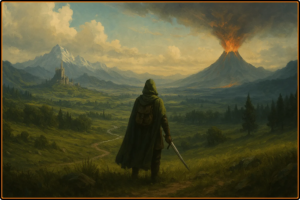
Very few worlds inspire defensive passion the way Middle-earth does. The fanbase isn’t merely enthusiastic; it is protective. Tolkien’s writings are treated like living scripture. Every detail, every name, every architectural curve carries emotional weight. A single inconsistency in a show or film can spark global debate. Imagine what a true RPG a sandbox of thousands of player-driven deviations would provoke. Studios understand this. Rights holders understand it even more. One wrong design decision, one lore deviation, one magic ability invented for gameplay convenience, and the backlash would be monumental. The expectations surrounding Middle-earth aren’t just high they’re unforgiving. And when you combine this with the sheer financial cost of producing a large-scale RPG, you start to see why studios hesitate. It isn’t just about rights. It’s about fear. Fear of misinterpretation, misrepresentation, or simply failing to capture the tone. Tolkien’s world breathes melancholy, beauty, loss, struggle, endurance, and quiet heroism. You cannot maintain that tone while giving players unrestricted freedom to behave chaotically. The world would fall apart tonally before the player reached their first main quest marker. And studios know it. So they avoid the risk entirely.
Why a real middle-earth rpg is so hard to make
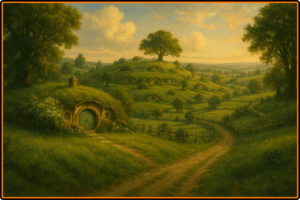
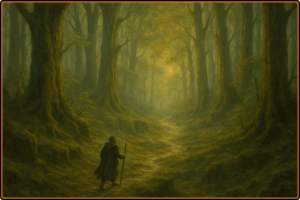
For a moment, imagine the perfect Middle-earth RPG. Not the one publishers think will sell, but the one fans whisper about when nobody else is listening. A world where exploring is not a means to an objective but a reward in itself. Where the silence of the Shire feels like a warm breath, where the ruins of Arnor feel like echoes of a tragedy you will never fully grasp but can still sense. Where magic is something witnessed rather than thrown from a hotbar. Where your character doesn’t reshape the world the world reshapes them. Such an RPG would need to embrace restraint. It would need to accept that not all stories are about power. It would need to center emotion over domination, atmosphere over mechanics, subtlety over spectacle. Middle-earth would reject a standard RPG progression system. It would reject a morality slider. It would reject faction manipulation. The game would succeed only if it leaned into limitations as part of the design, presenting a world where your influence is small but meaningful, where choices matter personally rather than politically, and where the mythology remains untouched. That is an artistic challenge of the highest order. And the industry today rarely funds that kind of ambition.
Industry reality: A world waiting for a studio brave enough to try
Now that Embracer owns Middle-earth Enterprises, the floodgates are open for new LOTR projects, but quantity does not create the conditions necessary for one perfect game. The rights are still fractured. The expectations still enormous. And the pressure to avoid controversy remains suffocating. Even Amazon’s Rings of Power, with its monumental budget and genuine passion, showed how narrow the path is when working inside Tolkien’s universe. One tonal slip and the entire audience fractures. Studios see that. They understand how fragile Middle-earth is as a gaming environment. And until someone steps forward with a vision grounded in humility, reverence, artistic discipline, and a willingness to tell a quieter story, the RPG we dream of will remain out of reach. But the longing itself the fact that players keep imagining it, keep begging for it, keep discussing it two decades later is proof that the desire hasn’t faded. In some ways, that dream has become part of Middle-earth’s legacy.