
REVIEW | FOOTBALL MANAGER 26 | BOLD OVERHAUL WITH ROUGH EDGES
Football Manager 26 has been one of the most anticipated and divisive entries in the franchise’s long history. After skipping what would have been FM25, Sports Interactive used the extra development time to rebuild large parts of the game, switching to Unity, rethinking the UI, and introducing new tactical systems. But as soon as I loaded it, it was obvious: this is a version with real ambition, yet one that carries the scars of a rushed launch. There are big glimmers of its future potential, but in its current state, FM26 feels like a work in progress in many respects.
A Fresh Start: for Better and for Worse
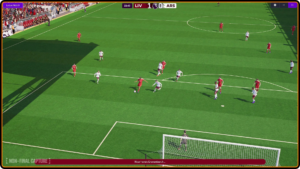
At first glance, FM26’s ambition is clear. By rebuilding core systems, Sports Interactive seems to aim for a long-term foundation rather than a yearly incremental update. The move to Unity delivers visible improvements: player movement is smoother, animations are more natural, and matchdays actually feel more alive than in older FM titles. But that very ambition brings with it growing pains. There’s a tension between the promise of a new generation of FM and the very real frustrations players are experiencing now, and for someone who has spent countless hours in earlier entries, that tension is hard to ignore.
Match Engine & Tactical Innovations
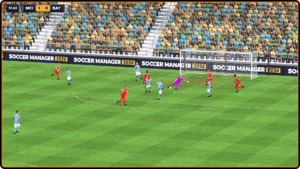
One of the most important strides in FM26 is the refinement of tactics. Perhaps the most talked-about change is the division between in‑possession and out‑of‑possession tactics: you can now set very different instructions depending on whether your team has the ball. That alone adds a richer layer of strategic depth, because it forces you to think about transitions more deliberately. It’s not just “attack or defend,” but rather how you behave in each phase. This flexibility is something I found genuinely compelling tweaking pressing intensity or movement triggers depending on the context feels much more realistic than the static tactics of the past. Player roles are more nuanced now, too. There’s an expanded variety of behaviors, and some roles feel less rigidly scripted. In practice, this means that two players with the same “role” can act quite differently, based on individual attributes and the specific tactical instructions you layer on. It rewards tinkering, experimentation, and a manager’s intuition. You’re not just picking a formation; you’re sculpting a system. The match engine, benefiting from Unity, feels livelier. Animations are smoother, player positioning feels more dynamic, and there’s a subtle touch of realism in how players move and react. While it’s not utterly photorealistic FM was never about ultra high-fidelity graphics the improvements are meaningful and contribute to a more engaging matchday experience.
User Interface & Usability: The Biggest Pain Point
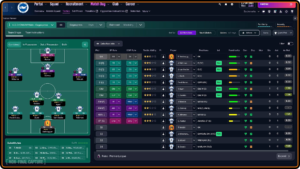
If the tactical and engine upgrades are FM26’s heart, the user interface might be its Achilles’ heel. This is where many longtime players are most vocal and with good reason. The new UI feels fragmented and, in some places, poorly designed for mouse and keyboard. Menus are nested deeply, and crucial information is hidden under layers that take too many clicks to reach. According to Forbes, there are “vast expanses of wasted space” in key panels, which isn’t just ugly, but inefficient. Press conferences are a perfect microcosm of the UI problems. The default modal shows only a handful of canned responses, but if you want to do something “extra” (like refuse a question or walk out), you have to dig into a hidden menu at the bottom. That kind of design decision feels unpolished and frustrating. There’s also a recurring complaint that the UI seems more tailored for console controllers than for PC, despite being on PC first. Carousel panels, large panels, and menu structures make sense when you have triggers and analog sticks, but using a mouse to navigate them feels clunky. On top of that, players report misaligned text, clipping problems, icons in the wrong spots, and even random language mix-ups in menus. For a series that has always relied on large amounts of data and deep management screens, a confusing or inefficient UI is a serious issue. Some of the “muscle memory” from older FMs breaks down completely: long-time users struggle to remember where their go-to screens are, and the re-learning is both frustrating and time-consuming. One seasoned player described the experience like this: “Essential screens are sometimes hard to find…so many of the modules are either bugged or are just straight up bad.”
Bugs, Performance & Stability
This is another place where FM26’s launch has generated a lot of heat—and with justification. There are widespread reports of crashes, freezes, and general instability. Forbes, for example, highlights these issues as part of what makes the release feel “the buggiest” in decades. On Steam, a large majority of users have flagged performance issues, poor optimization, and UI sluggishness. Even after patches, some problems persist. There are user reports that menus remain unresponsive or slow, and navigating to key tactical or staff screens still feels laggy. The crashes may be less frequent than at launch, but for a game that demands so much from its interface and simulation, even occasional freezes break the immersion. Community voices reflect this clearly: “I refunded due to the sheer quantity and impact of UI bugs…if they just resolve the worst issues I think I’ll be diving right in.” “The new interface is awful – confusing and ugly at the same time…everything feels watered down and soulless.” These aren’t minor grumbles for many, the bugs and design failures are damning.
Missing Features & Feature Regression
One of the more controversial aspects of FM26 is how much it feels like something has been “taken away” even as new systems are added. Longtime community members point out that certain beloved features are missing, reduced, or changed in ways that feel like a step backwards. According to some reviews, features such as international management or advanced match statistics are not in the shape players hoped for. The Data Hub which should be a strong point of FM’s data-driven simulation has come under fire for being inaccurate. Numerous players claim that the formation analysis doesn’t reflect actual tactical usage. For example: “The Data Hub … claims you’ve played a formation 95% of the time, even though you never even set that formation up.” Broken analytics like this undermine one of FM’s core pillars: trust in data. Also, the feature removal goes beyond analytics. Some QoL (quality-of-life) elements have been scaled back or are more difficult to access. There are complaints about removed or disabled community skin support, making UI customization harder than before, which frustrates longtime modders. Training setup has become more tedious: selecting time slots is more inconvenient, and some users feel forced into delegating tasks they don’t want to, because the UI makes doing them manually cumbersome.
Long-Term Vision and Community Reaction
Here’s where things get interesting: despite the heavy criticisms, there’s a sense among parts of the community that FM26 might represent a deliberate laying of groundwork for the future. Some believe that SI is “building a base for the next 20 years” rather than just tweaking the same game over and over.The dual tactical system, the engine overhaul, and more realistic animations hint at ambition, not laziness. But that long-term vision is not reassuring everyone. On Reddit, some veteran players argue that the launch problems expose deeper issues in how SI approaches the franchise: “Bugs everywhere, abandoned features…absolutely everything in the game is made inconvenient.”Another warned that while people are focused on the UI and stability now, the real concern should be that “a lot of the new features feel surface-level while decade-old issues remain untouched.” There’s a philosophical divide: to some, the problems are fixable, and FM26 is simply the rough foundation of a new era. To others, it feels like a betrayal of what made the franchise special simplicity, depth, and a commitment to simulation rather than flashy design.
Accessibility: Friend or Foe?
Ironically, some of the changes that alienate longtime fans might help newcomers. The revamped UI, though flawed, seems to lower the barrier to entry for less experienced players. The new tutorial system and FMPedia help guide newcomers through complex mechanics more comfortably than previous titles. This could be a deliberate move by SI: making the simulation more welcoming while planning to patch in the deeper features later. But “accessibility” doesn’t excuse the broken bits. Many in the core community feel that in making the game more accessible, SI has sacrificed too much maturity and polish. For them, FM26 is not an evolution they feel it’s a simplification.
Value, Pricing & Justification
FM26 shipped at full price, but given the state at launch, many players argue the game feels unfinished. When you pay “AAA” money, you expect a stable and polished product, especially after a two-year development cycle. Several critics and fans have called out the “scandalous” level of polish or lack thereoffor a release of this scale. There is a silver lining, however: if SI continues to deliver patches and improvements, the long-term value could rise significantly. For players willing to be patient, FM26 might eventually become a rewarding platform for deep managerial experiences. But that patience is not trivial some have already refunded; others risk abandoning it entirely.
The Real Experience: My Time as Manager
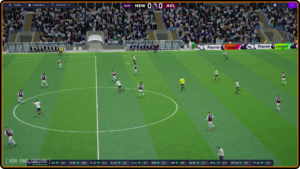
From my own experience, FM26 feels like a double-edged sword. I spent hours in my first save, tinkering with the two-phase tactics, adjusting pressing settings, and delighting as matches felt more fluid than in FM24 or earlier. When things work, there’s a real sense of agency in how the team behaves. Matches feel more immersive, and tactical decisions truly matter. But that excitement was tempered by frustration. I found myself clicking through complex menus just to reach a screen I used constantly. In early days, I had crashes. Some screens took way too long to load. The data I trusted formation usage, player stats sometimes didn’t reflect what I actually did. At points, I felt like I was playing a beta, not a full retail release. Still, after I learned to use bookmarks (a lifesaver) and got comfortable with shortcuts, things smoothed out somewhat. I could mostly reach my favorite panels more efficiently, and the tactical depth rewarded experimentation. The narrative potential the drama of promotion battles, relegation scares, transfer decisions reminds me why I came to FM in the first place. There’s a foundation here worth working with. But in its present form, FM26 often feels like it’s building toward something rather than being that something already.
Why the Community Is So Polarized
The sharp divide in reactions makes sense. On one side are longtime managers who love the franchise for its brutal complexity, deep data, and immersive texts. For them, the interface feels like it’s moved backwards, not forward. The bugs, the missing features, the performance issues: these are not minor inconveniences; they strike at the core of what FM is supposed to be.On the other side, there are players who are less invested in legacy systems and more excited by the new tactical possibilities, the smoother animations, and a more modern presentation. For these players, FM26 offers enough novelty and raw substance to be exciting, despite its flaws. Then there’s a third group those who feel like FM26 is a necessary stepping stone. They’re hopeful that with enough patching, SI can fix the UI, refine the data systems, and unlock the potential of this new engine. They don’t necessarily dismiss the early troubles; but they believe they are surmountable.
Final Thoughts
Ultimately, FM26 is messy, ambitious, and frustrating in roughly equal measure. It doesn’t yet feel polished, and for many, it falls short of the high expectations set by a two-year development leap. Yet under its troubled exterior, there’s a beating heart of what could be the next great Football Manager: tactical depth, a more realistic match engine, and a modular system that rewards experimentation. If you’re a die-hard FM fan who values full-featured content, stable systems, and proven usability, FM26’s flaws are likely to feel like a betrayal. But if you’re someone who enjoys tinkering, embracing risk, and riding through the rough patches because you believe in the long-term vision, then there’s genuine reason to be optimistic. It’s not the triumphant rebirth some hoped for, but it’s far from a total failure. At 71/100, it earns that score because of its potential. The foundation is promising, but the execution needs serious polishing. Time (and patches) may tell whether FM26 becomes the bold reset it aims to be or just a regrettable misstep.